New or used is the first fork in every caravan search, and neither path wins outright. New buys a warranty, a known history and the layout you actually want, at the highest price it will ever be. Used buys more van for the money, and the risk moves into the van's history, where a careful inspection has to find it. The right answer depends on your budget, your patience and how sure you are about what you need.
What new really buys you
- Warranty and a service network. When something fails in the first year, and on a house on wheels something usually does, the maker owns the problem.
- A known history. No water damage hiding behind fresh silicone, no mystery repairs.
- Your spec. The layout, tanks and battery setup you chose, not someone else's compromises.
- The early value drop. The price paid for all of the above. Like a car, a new van loses the most value in its first years, and the buyer after you collects that saving.
What used really buys you
The same van, a few years on, often sells for meaningfully less, and someone else has already found the teething faults and had them fixed. The trade is that you inherit its history, whatever it is. The van that was stored under a roof and serviced on schedule is a genuine bargain. The one that sat sealed through two wet summers is not, no matter the price.
Checking a used van
Water is the thing that kills caravans, so it is the first and biggest check.
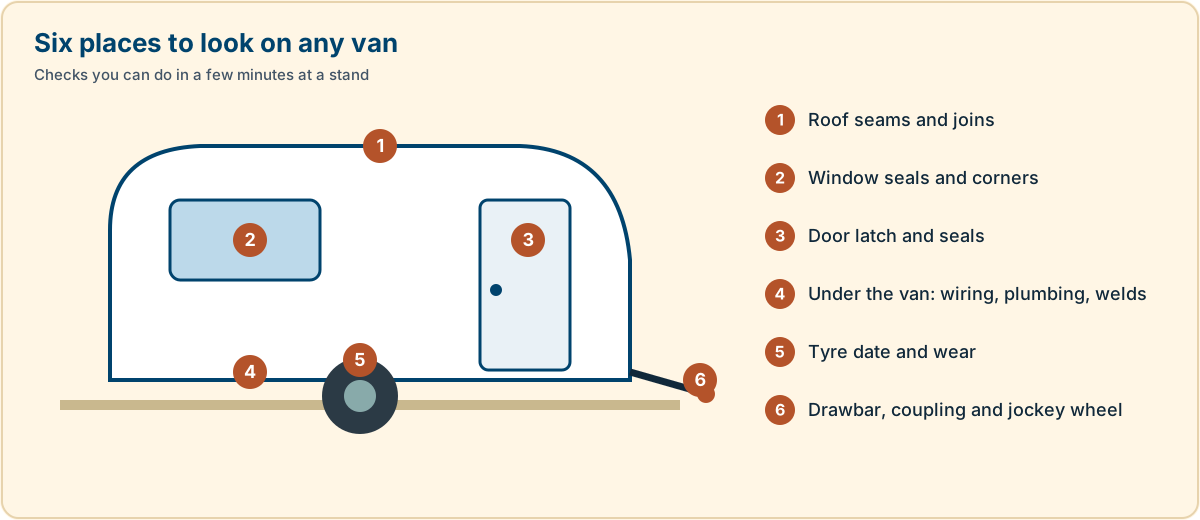
- Press the floor in corners and around the shower for soft spots, and look for stains around hatches, windows and lights.
- Smell the van after it has been shut up. Damp has a smell that an hour of airing does not remove.
- Look under the van at the chassis, welds, plumbing and wiring.
- Tyres age out before they wear out on most vans, so check the date stamp, not the tread.
- Ask for the service record, especially bearings and brakes, and the weighbridge ticket if they have one.
On any van you are serious about, check the compliance plate numbers yourself and do the payload subtraction: caravan payload explained shows how, and can your car actually tow that caravan covers the tow-vehicle half.
The first van is rarely the forever van
Most owners learn what they actually need by travelling: the bed that matters more than the ensuite, the tanks they never filled, the length that would not fit the site they loved. That is a strong argument for making the first van a modest one, new or used, and letting real trips write the spec for the second.
Whichever path you take, you will look at more vans than you can hold in your head. VanVerdict keeps a record per van, with the plate numbers, photos and your notes, so the comparison at the kitchen table runs on evidence. If shows are part of your search, start with the caravan show checklist.
Questions people ask
Is it better to buy a new or used caravan first?
Neither wins outright. New buys warranty and a known history at a higher price. Used buys more van for the money, with the risk living in its history, so the inspection does the work.
What should I check on a used caravan?
Water damage first: soft floors, stains around hatches and windows, and the smell when it has been shut. Then chassis, bearings, tyres by age not tread, seals and the service record.
Do caravans lose value quickly?
A new van loses the most value early on, like a car, and the rate differs by maker and demand. Compare asking prices for three to five year old vans of the model you want to see it for yourself.
Should my first caravan be smaller?
Many first owners discover what they actually need by travelling, then change vans. A smaller, simpler first van keeps that lesson cheap and is easier to tow while you learn.
The VanVerdict team