
Payload is the weight you are allowed to add to a caravan, and it is the number that catches more first owners than any other. The van's brochure never shouts it, because it is not a feature. It is a gap: the difference between the van's empty weight and the most it may legally weigh. On some vans that gap is generous. On others, two full water tanks and a toolbox use most of it before a single bag goes in.
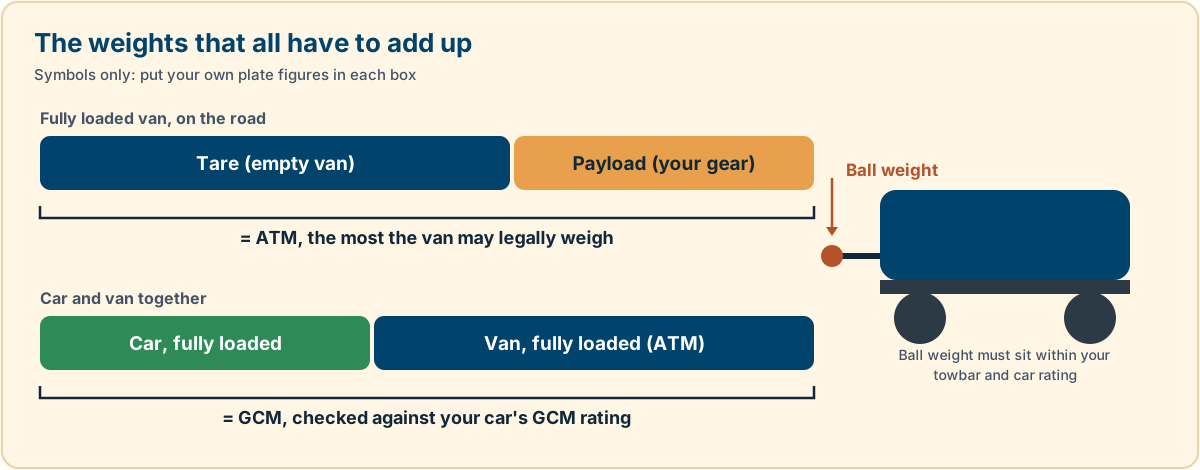
Tare, ATM and the gap between them
Three numbers do all the work, and two of them are on the van's compliance plate.
- Tare is the van's weight as it left the factory: empty tanks, empty gas bottles, nothing in the cupboards.
- ATM (Aggregate Trailer Mass) is the most the van may legally weigh when loaded and uncoupled.
- Payload is ATM minus tare. That is it. Everything you add to the van has to fit in that gap.
The word everything is doing real work there. Water, gas, batteries fitted after delivery, the annexe, solar panels added later, outdoor chairs, tools, food, clothes and the box of things you might need all count against the same gap.
Why the kilos run out so fast
Water is the quiet one. A litre of water weighs a kilogram, so a van carrying large tanks can swallow a big share of a modest payload before you load anything you can see. Gas bottles, a second battery, an inverter and a slide-out barbecue follow the same pattern: each one sounded small in the showroom and none of them come off at the weighbridge.
The other trap is that tare is measured as delivered. Anything fitted afterwards, by the dealer or by you, has already spent part of the payload. A van bought with aftermarket extras can arrive with meaningfully less capacity than the plate suggests.
How to check a van before you buy
- Read tare and ATM off the compliance plate and do the subtraction yourself. Do not take a verbal payload figure.
- List what you will actually carry, with water at a kilogram a litre, and add it up. Be honest about the tools and the second fridge.
- Ask what has been fitted since the plate was stamped, because that weight is already spent.
- For a used van, or any van you are serious about, a weighbridge gives you the real tare rather than the factory one.
Payload is one half of the picture. The other half is whether your car can legally tow the loaded van at all, which is its own set of numbers: see can your car actually tow that caravan.
Write the numbers down once, use them everywhere
Every van you look at has its own tare, ATM and real payload, and after three inspections they blur. This is exactly what VanVerdict is for: capture the plate, the numbers and your notes at each van, and compare them calmly at home instead of from memory. If you are heading to a show to do the looking, take the caravan show checklist with you.
Questions people ask
What is the payload of a caravan?
Payload is the van's ATM minus its tare: the weight you are allowed to add. Everything counts, including water, gas, batteries, the annexe and your gear.
Does water count as caravan payload?
Yes. Every litre of water is a kilogram of payload, so full tanks on a van with large capacity can use a big share of it before anything else goes in.
Where do I find tare and ATM?
Both are on the van's compliance plate. The tare on the plate is the van as delivered, so anything fitted afterwards has already eaten payload. A weighbridge gives the real number.
How much payload do I need?
Add up what you will actually carry: water, gas, batteries, tools, food, clothes and anything fitted after delivery. Many buyers are surprised how quickly the total passes a few hundred kilograms.
The VanVerdict team