
Hybrid, plug-in hybrid or electric is not really a question about cars. It is a question about your driving, and two facts about it settle most of the decision: where your kilometres happen, and whether you can charge at home. Get those two straight and the shortlist nearly writes itself.
What each one actually is
- Hybrid. A petrol car with a small battery and electric motor that it charges itself, mostly from braking. You never plug it in. It simply uses less fuel, especially in stop-start town driving.
- Plug-in hybrid (PHEV). A bigger battery you charge from a socket. Short daily trips can run on electricity alone, and the petrol engine carries you beyond that. It only pays its way if you actually plug it in.
- Electric (EV). Battery only. No fuel, fewer moving parts, and the whole experience depends on where and how you charge.
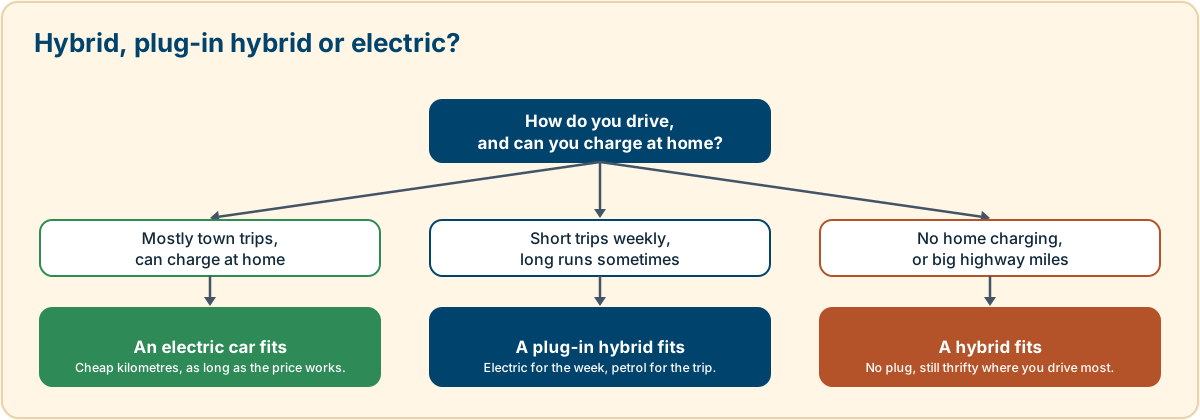
Two questions settle it
First: where do you drive? Mostly around town, a daily commute, or long highway runs? Town and commuting favour batteries, because that is where electric running is at its best. Long, repeated highway distances lean back towards a hybrid, which refuels anywhere in minutes.
Second: can you charge at home or at work? A powerpoint in a garage or carport changes everything. Charging overnight at home is the cheap, effortless version of EV ownership. Depending on public chargers is a different life, and you should decide with that difference in front of you, not discover it afterwards.
- Mostly town driving, home charging available: an EV deserves the first look.
- Mixed driving, home charging available: a plug-in hybrid covers the daily trips on battery and the long weekends on petrol.
- No home charging, or mostly long highway runs: a hybrid gives you most of the fuel saving with none of the charging questions.
Doing the money honestly
Each step up the battery ladder usually costs more to buy. Whether it comes back depends on your own yearly kilometres, your electricity price and what you pay for fuel, so work it out from your numbers rather than a brochure claim. A PHEV in particular rewards owners who plug in every night and punishes those who never do, because then it is a heavier petrol car.
Turning the badge decision into a shortlist
Once you know which type fits your driving, the question becomes which models actually sell in Australia in that type. Our car brands catalogue lists what every brand currently offers, so you can build the shortlist from what is really on sale. From there, capture each contender in the Car Verdict app as you research and test drive, and the comparison stays on the record instead of in your head.
When the shortlist becomes a quote, price it properly: drive away price explained covers what the number must include.
Questions people ask
What is the difference between a hybrid and a plug-in hybrid?
A hybrid charges itself while you drive and never plugs in. A plug-in hybrid has a bigger battery you charge from a socket, drives short trips on electricity, and falls back to petrol beyond that.
Do I need home charging for an electric car?
It is the difference between an EV that is cheap and easy to live with and one that depends on public chargers. If you cannot charge at home or at work, weigh that honestly before committing.
Is a hybrid worth the extra cost?
It depends on how far you drive and the fuel the hybrid saves on your kind of trips. Work it out from your own yearly kilometres rather than a brochure figure.
Which brands sell hybrids and electric cars in Australia?
Most major brands now sell at least one. Our car brands catalogue lists the current models for each brand so you can compare what is actually on sale.
The Car Verdict team